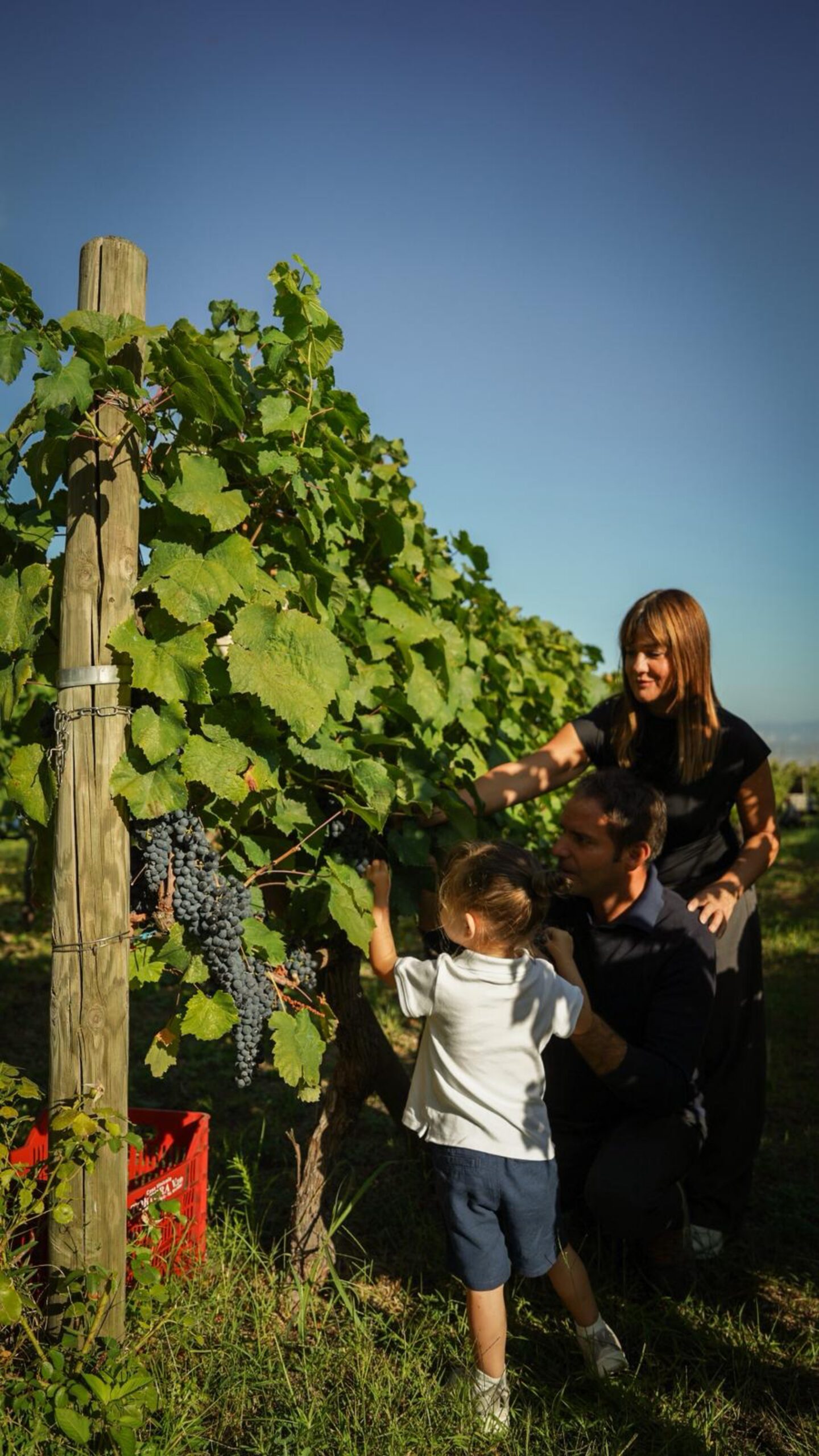
Borgo Giulia was born from the passion of Tina and Enzo, who chose to invest in the land by rediscovering traditional knowledge and bringing it into the present with awareness and vision.
Not a nostalgic return to the past, but a natural continuity — making wine with respect for its origin, the time it requires, and the work behind it.
Borgo Giulia is a winery in constant evolution, attentive to the dynamics of the market and the development of modern viticulture. It grows without forcing change, preserving a deep bond with its territory while shaping, year after year, a clear and distinctive production identity.
Borgo Giulia is a winery in evolution, attentive to market dynamics and the developments of viticulture, growing over time without forcing change, maintaining a strong bond with the territory and building, year after year, its own clear production identity.
Story
Borgo Giulia
Borgo Giulia was founded in Corbara through a project built over time, with patience and dedication.
It was born from the desire to restore and enhance viticulture in a land where agriculture has always played a central role in the lives of local families.
Territory
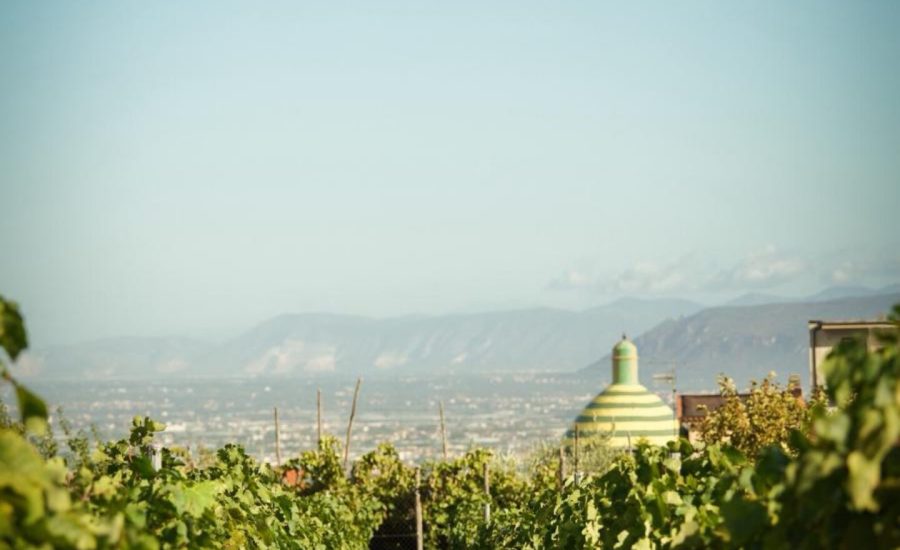
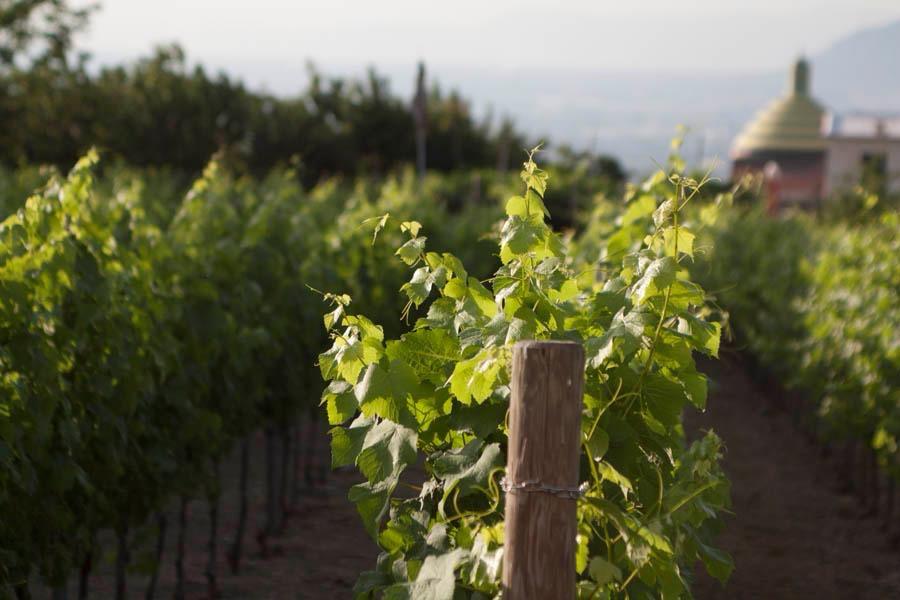
Corbara lies in a unique position between mountain and sea, in the heart of the Monti Lattari.
It is a complex landscape shaped by altitude, shifting exposures, and strong climatic influences — a place where every decision in the vineyard truly matters. Un territorio complesso, fatto di altitudini, esposizioni variabili e forti influenze climatiche, che rende ogni scelta in vigna determinante.
The hills surrounding Borgo Giulia benefit from constant ventilation and intense light, elements that accompany the ripening of the grapes and help define the character of the wines.
The soil, fertile and ancient, tells a long agricultural story and gives depth and complexity to its fruit.
Viticulture here has never been easy. It is a demanding land — and precisely this challenge makes it authentic. A place that does not adapt to man, but invites man to adapt to its nature.
Winery
The Borgo Giulia winery was conceived as a natural extension of the vineyard. Every stage of production is designed to accompany the wine without interfering with its character.
Vinification is carried out with care and respect, using modern technologies only when they help preserve the quality and identity of the grapes. Stainless steel and oak coexist in balance, depending on the wine, the variety, and the vintage.
In the cellar, time is a fundamental ally. Some wines mature slowly in barriques, while others express their freshness through more direct vinification. In every case, the goal remains the same: to allow the wine to express the territory without masks.
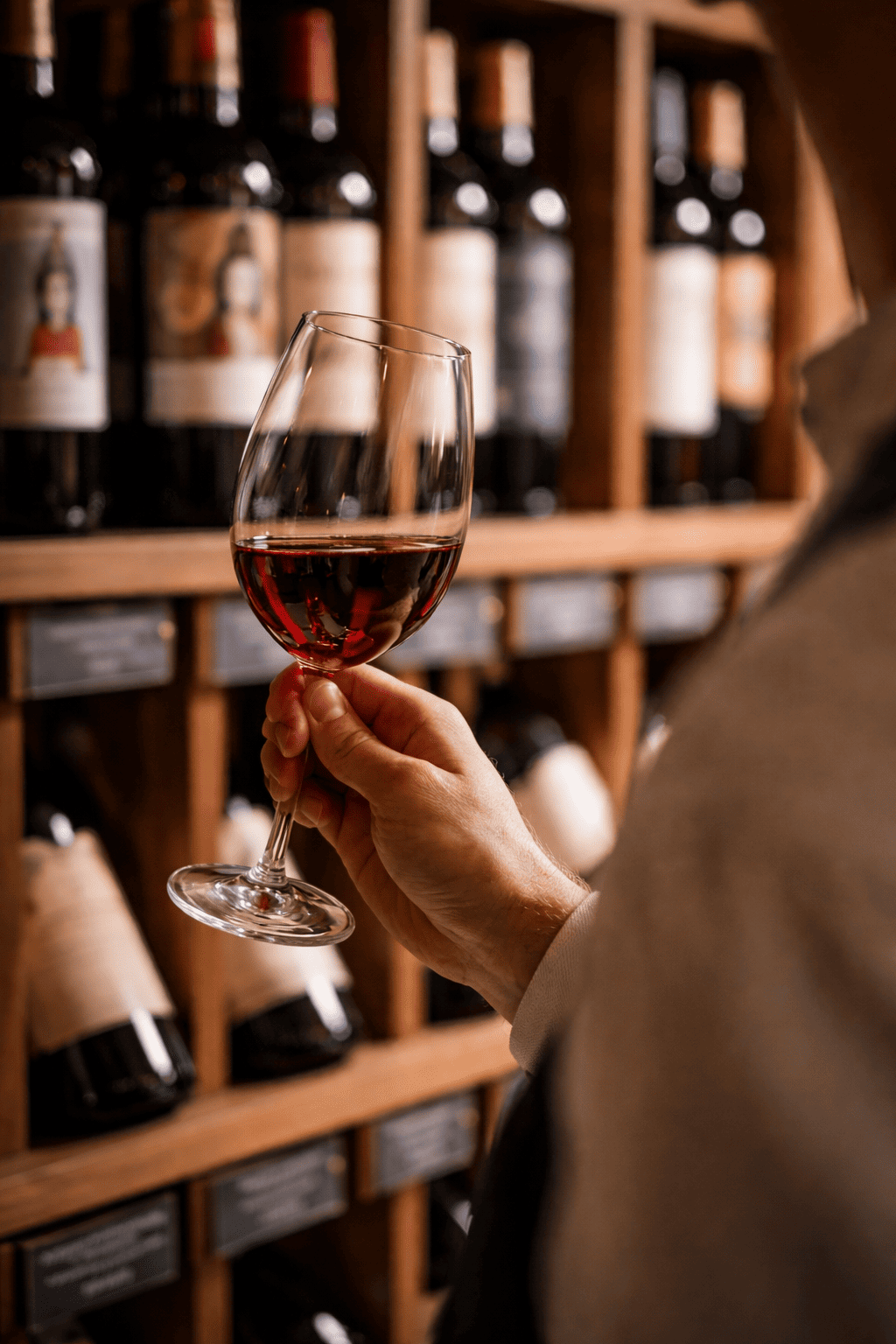
The winery can be visited as part of one of our experiences or while dining at the Wine Bistrot.
Terrace
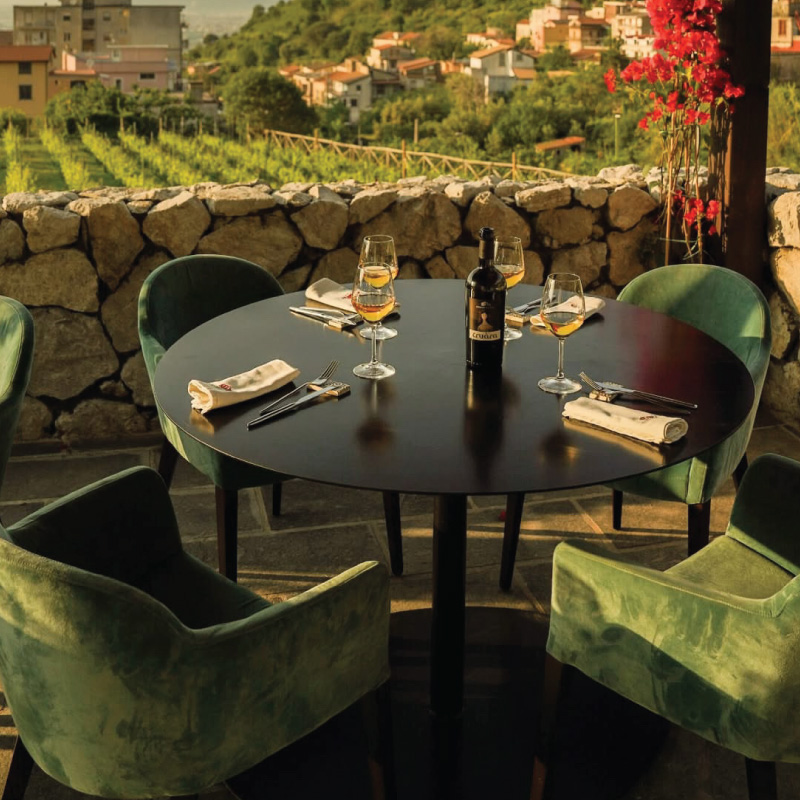
The Borgo Giulia terrace is a space designed for sharing.
Overlooking vineyards and rolling hills, it allows guests to experience the landscape directly, surrounded by open sky and light.
Here, wine meets cuisine, and tastings become moments of conviviality and pause. An informal yet refined setting where time slows down and the experience unfolds in simplicity: a glass, a dish, and a view that changes with the seasons.
The terrace represents the most open expression of Borgo Giulia — where wine leaves the cellar to be fully experienced.
Caveau
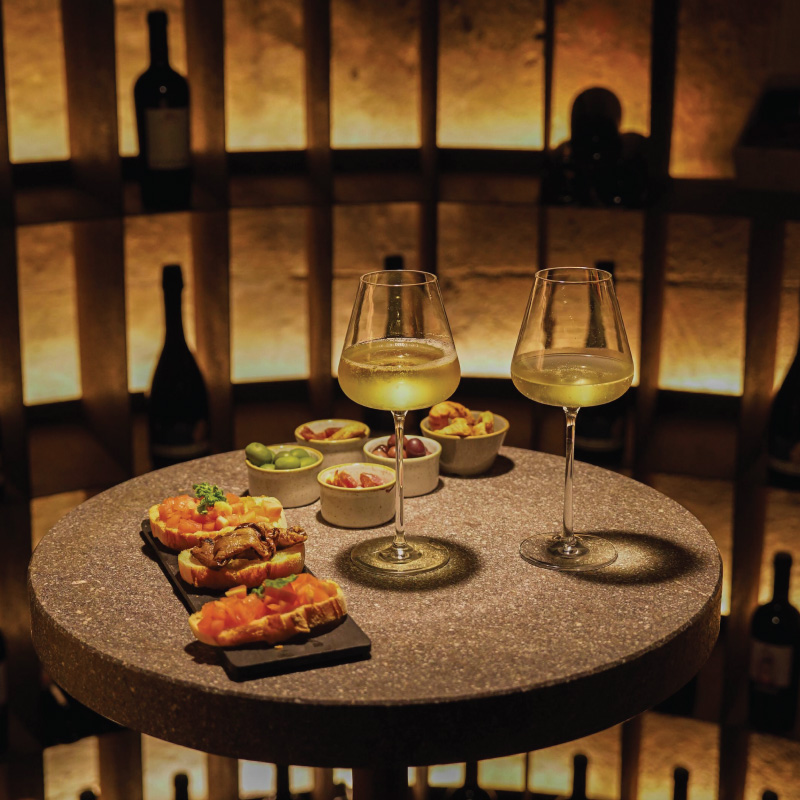
The Caveau is the most intimate space at Borgo Giulia.
A secluded room carved into stone, designed for those seeking privacy and quiet reflection.
Here, wine is tasted slowly, away from everyday distractions. A single table, limited seating, and a tailored journey invite guests to explore the wines, vintages, and philosophy in depth.
The Caveau is not simply a private table within the Wine Bistrot — it is a different way of experiencing Borgo Giulia: slower, more focused, more profound.
Barrel room
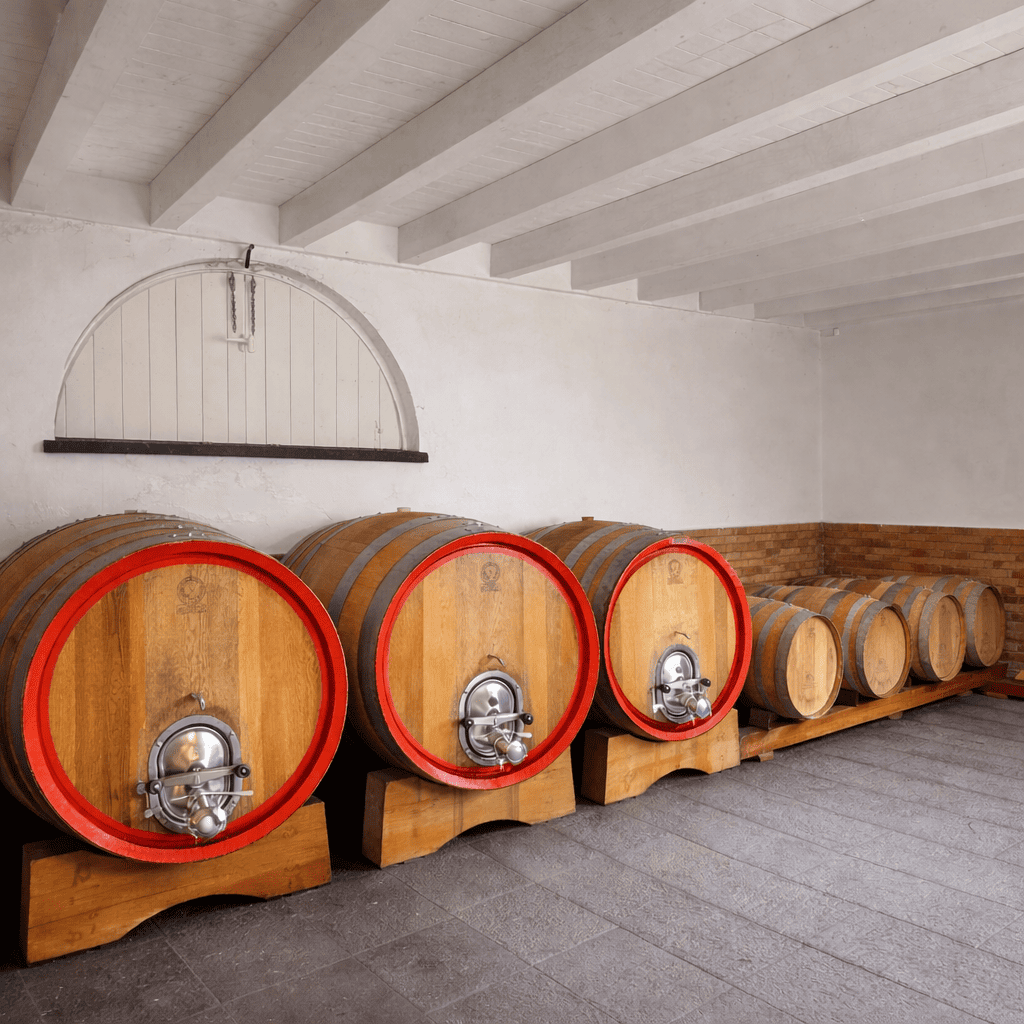
The Borgo Giulia barrel room is where time becomes central.
Here, wine rests and matures slowly, guided by oak without excess or unnecessary intervention.
Barriques and larger oak barrels are used with restraint, according to the wine and the vintage. Wood is never the protagonist but a tool — supporting evolution, refining structure, and adding depth while respecting the identity of the grape and the land.
In the barrel room, work is defined by patience and observation. Each wine follows its own rhythm until it reaches a balance that cannot be rushed.
It is a quiet, essential space where wine takes its final shape before being shared.